
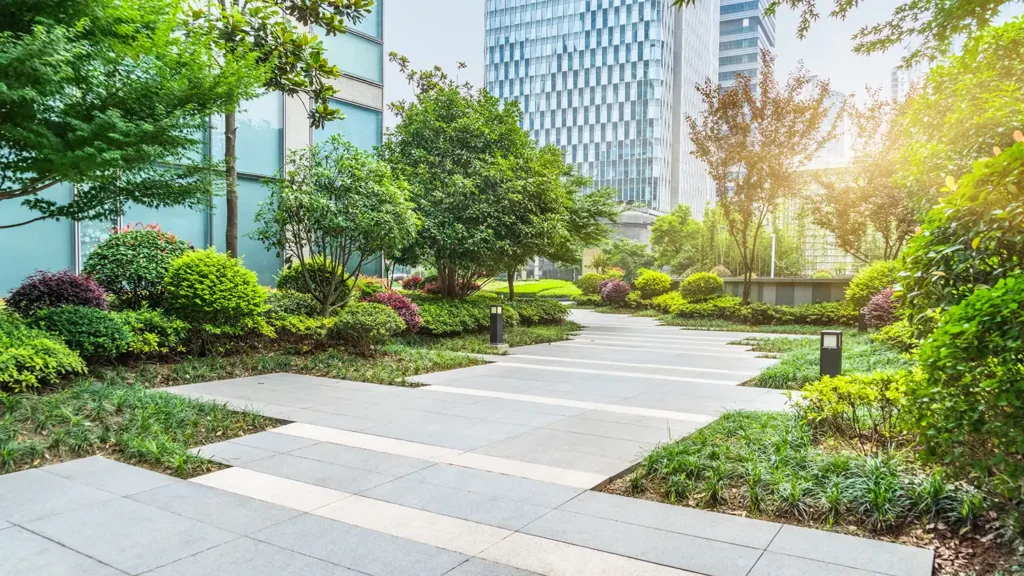
Public landscapes have to do more than look good. They need to stay healthy, safe, and functional under heavy use, changing seasons, and real-world water constraints. That is why commercial irrigation design matters so much in parks, campuses, civic plazas, streetscapes, and other shared environments. For Colorado Outdoor Environments, the best systems are not just efficient on paper; they are built to perform reliably in the field while supporting long-term plant health and responsible water use.
Why Public Spaces Need A Different Irrigation Strategy
Commercial irrigation design for public spaces is not the same as residential watering with a larger footprint. Public sites usually combine turf, trees, shrubs, medians, native areas, planters, and specialty beds within one connected system. Each zone may have a different water demand, exposure level, and maintenance schedule.
That complexity creates real design pressure. A system that overwaters one area and underwaters another wastes water and creates visible problems quickly. Dry turf, stressed plant material, runoff, and maintenance callbacks are common when the system is not matched to the site.
In public spaces, the irrigation design also has to account for:
- Frequent foot traffic and wear
- Uneven sun, wind, and slope conditions
- Varying soil types and infiltration rates
- Limited access for repairs and adjustments
- Long-term operational efficiency, not just installation speed
For Colorado Outdoor Environments, those factors guide the entire planning process. The goal is not simply to distribute water. It is to deliver the right amount of water to the right place, at the right time, with minimal waste and maximum reliability.
The Core Technical Requirements Behind A Reliable System
A durable public-space irrigation system starts with the basics, but the basics have to be done well. In commercial irrigation design, the technical details determine whether the system will be easy to manage or constantly frustrating.
Hydraulic Planning Comes First
Hydraulics are the foundation of irrigation performance. A system must be designed around actual water availability, pressure, and flow, not assumptions. That means evaluating how much water the site can deliver, how the pressure changes across the property, and whether the proposed zones can operate together without losing efficiency.
When hydraulics are overlooked, the result is uneven coverage, excessive pressure loss, poor spray performance, and damaged components. Colorado Outdoor Environments approaches this by matching the hydraulic system components to the site conditions before equipment is selected. That creates a more balanced, dependable system from day one.
Zone Design Must Match Plant Needs
A public site should not be watered as one large uniform landscape. Smart zoning separates turf, trees, groundcovers, beds, and low-water areas so each can receive the correct application. This is especially important where sun exposure, slope, and soil conditions vary from one section to another.
Good zone design also improves maintenance. Crews can troubleshoot problems faster when each zone serves a clear purpose. It also supports seasonal adjustments without forcing the entire property to operate on the same schedule.
Smart Controls Add Real Oversight
Modern public irrigation systems benefit from smart irrigation technology that goes beyond a basic timer. Soil moisture sensors, flow & pressure sensors, and mobile device controls can help managers monitor conditions, detect issues, and respond faster to changes in weather or site performance.
This is especially useful in public spaces where water loss or a broken head may go unnoticed for days. Colorado Outdoor Environments incorporates smart technology into system designs so managers can make more informed decisions instead of relying on guesswork.
How To Build For Water Efficiency Without Sacrificing Landscape Health
Water conservation is important, but a public-space system still has to protect plant health and presentation. The best designs strike that balance by combining technical precision with practical operating flexibility.
One of the most effective approaches is to design around site-specific needs instead of defaulting to a one-size-fits-all template. That means studying soil type, plant material, grading, sun exposure, and expected use patterns before finalizing the layout.
Drip irrigation is often a strong choice for shrub beds, tree rings, planter areas, and other targeted applications where slow, direct delivery reduces waste. In contrast, turf areas may require different equipment, spacing, and scheduling logic. The key is to use the right method in the right place rather than forcing one product type across the whole property.
Thoughtful design also makes seasonal management easier. Public landscapes often need adjustments as temperature, wind, and plant demand shift through the year. Systems built with flexibility in mind are easier for staff to manage and less likely to drift into overwatering.
When Colorado Outdoor Environments designs a system, the focus is not only on installation day. The real value comes from how well the system performs over time, especially when it must support consistent appearance with limited maintenance resources.
Common Mistakes That Create Problems Later
Many public irrigation issues trace back to decisions made during the design phase. Avoiding those mistakes saves time, reduces callbacks, and improves system life.
A few of the most common problems include:
- Designing zones without separating different plant water needs
- Ignoring pressure variation across the site
- Using oversized or undersized components
- Failing to account for wind, slope, or soil infiltration
- Skipping sensor integration that could improve monitoring
- Building without a clear maintenance plan for access and adjustment
These issues may not show up immediately. A system can look fine during installation and still perform poorly once the landscape matures or the weather changes. That is why commercial irrigation design should be treated as infrastructure planning, not just equipment selection.
A practical example is a civic plaza with tree rings, container plantings, and adjacent turf. If all three areas are tied to the same schedule, the result is usually overwatering in one place and stress in another. A better approach uses separate zones, appropriate emitters, and control logic that reflects actual plant demand.
Colorado Outdoor Environments brings more than 30 years of experience to this kind of planning, which is valuable when a site has multiple layers of technical complexity and long-term performance expectations.
What Project Teams Should Ask Before Installation Begins
Before a public irrigation project moves forward, the design team, owners, and maintenance staff should be aligned on how the system will actually operate after construction. That conversation can prevent costly redesigns later.
A useful way to evaluate the plan is to ask:
- How will the site be divided into irrigation zones?
- What are the water supply and pressure constraints?
- Which areas need drip irrigation versus spray coverage?
- What sensors or smart controls will be included?
- How will the system be monitored and adjusted over time?
- Who will be responsible for ongoing management and seasonal changes?
These questions help clarify whether the plan is built for real-world use or only for paper compliance. They also reveal whether the system design supports the people who will manage it after the project is complete.
For municipalities, property managers, and landscape teams, this matters because a good design should reduce uncertainty, not add more of it. Colorado Outdoor Environments often supports projects through consulting, design, construction management, and smart system integration so the transition from concept to operation is smoother.
A Smarter Standard For Public Landscape Performance
Public spaces deserve irrigation systems that are efficient, resilient, and easy to manage. That takes more than standard layouts or generic equipment lists. It requires careful hydraulic planning, thoughtful zoning, smart controls, and a clear understanding of how the site will be used over time.
If you are evaluating a new project or trying to improve an existing one, start with a design process that treats water delivery as a technical system, not an afterthought. You can also review Colorado Outdoor Environments’ commercial irrigation design approach to see how a site-specific process supports better long-term results.
For teams planning parks, campuses, streetscapes, and other shared landscapes, Colorado Outdoor Environments offers the experience and technical depth needed to build systems that work in the real world.