
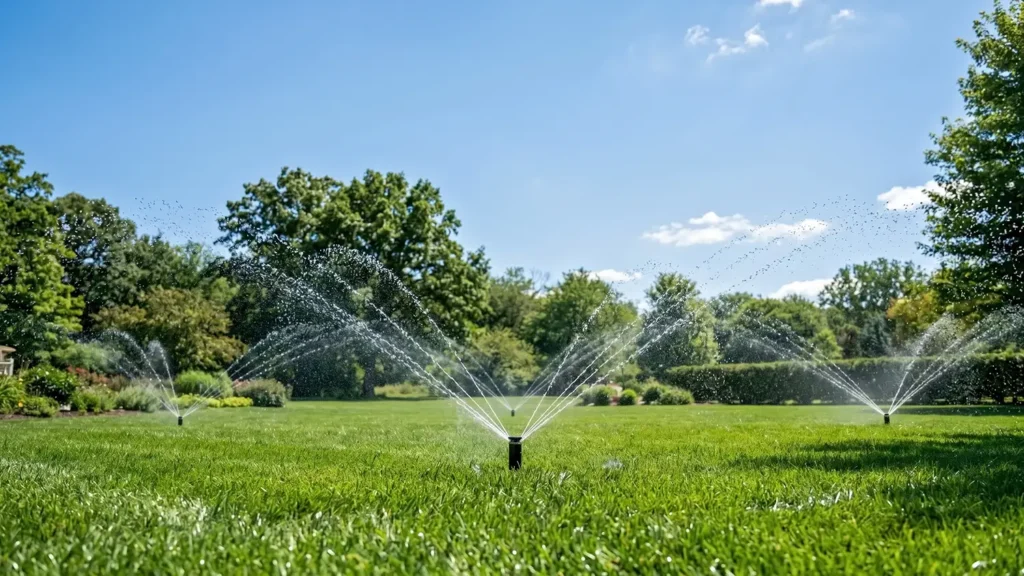
A dry patch in a grand landscape often evokes an immediate response: extend the watering duration. Yet if the underlying issue stems from uneven distribution or sub-optimal pressure, extending run times merely inundates surrounding areas while leaving the affected zone deficient.
Effective irrigation water conservation requires a rigorous understanding of site-specific hydrology. How efficiently does applied water reach the root zone? Where does premature runoff occur? Does the current regimen accurately reflect ambient environmental conditions?
Across private estates, expansive ranches, commercial developments, and municipal spaces, these inquiries directly govern resource efficiency, operational expenditures, and long-term landscape resilience.
At Colorado Outdoor Environments, we evaluate water conservation irrigation by aligning actual horticultural demand with measured system hydraulics, providing property stewards with an analytical foundation for precise management decisions.
Start With What the Landscape Actually Needs
A large property rarely has uniform watering requirements. An exposed turf area may dry out faster than a shaded planting bed, and newly planted trees demand different management than established vegetation.
Before modifying a schedule, evaluate the specific parameters each zone serves:
- Plant needs: Is the zone supporting established turf or specimens still developing root systems?
- Soil conditions: How rapidly does water infiltrate the soil, and what is its retention capacity?
- Exposure: Does the location receive full solar exposure or sit in a shaded microclimate?
- Terrain: Does water percolate into the targeted zone or migrate down gradient?
- Root-zone moisture: Is the sub-surface soil dry at the root depth, even if the surface appears saturated?
These targeted evaluations distinguish genuine moisture deficits from structural delivery flaws, ensuring schedules are governed by microclimate realities rather than superficial visual estimates.
Check Zone Performance Before Extending Run Times
A primary source of resource loss on large properties is the practice of compensating for poor precipitation uniformity by increasing overall run times.
Consider a lawn section where the center remains dry while the perimeter stays saturated. Running the entire zone longer increases water volume without correcting the root cause, such as a misaligned sprinkler head, a clogged nozzle, or inadequate operating pressure.
A comprehensive diagnostic evaluation verifies whether distribution uniformity is optimized prior to making schedule modifications to reduce irrigation water use.
Hydraulic zoning plays a pivotal role. When high-water turfgrass and low-water native flora reside on a shared control valve, achieving optimal irrigation efficiency becomes virtually impossible without architectural retrofits or refined control strategies.
Understanding these baseline mechanics allows for precise calibration before adjusting schedules to lower overall consumption.
Match the Schedule to How Water Enters the Soil
Run duration alone does not determine how efficiently a landscape absorbs moisture. Various sprinkler types apply water at differing precipitation rates, and each soil profile exhibits a distinct infiltration capacity. Engaging professional irrigation consulting helps establish these application dynamics accurately.
On steep grades or compacted soils, an extended single cycle generates surface runoff well before moisture reaches the target root zones.
A cycle-and-soak schedule divides the required application into multiple shorter intervals, allowing adequate soak time between cycles. The ideal configuration depends on empirical site conditions and precipitation rates.
Controllers must also be audited for redundant program assignments, as multiple active start times can inadvertently multiply total system output.
Before adding cycles, verify the baseline controller programming to avoid unintentional overwatering.
Look for Overwatering Beyond Puddles
Standing surface water is an obvious warning sign, but subtle system inefficiencies often go unnoticed during standard site inspections.
A zone may conclude its cycle hours before management arrives, or maintain sub-surface saturation without exhibiting visible surface ponding.
Key indicators of excess application include:
- Soil that remains fully saturated between scheduled events.
- Water overspraying onto hardscapes or escaping target landscape boundaries.
- Saturated pockets immediately adjacent to localized dry areas within one zone.
- Active irrigation cycles continuing during or following significant precipitation events.
- Anomalous increases in metered volume or continuous high flow logs.
These symptoms warrant thorough investigation. Persistent saturation, for instance, often indicates line leaks or compromised drainage rather than excessive scheduled run times.
Evaluating sub-surface moisture profiles eliminates speculation, as visual foliage stress alone is rarely a definitive indicator for increased water volume.
Use an Audit to Find Where Water Is Going
A comprehensive irrigation audit aligns programmed schedules with verified hydraulic performance.
For spray zones, catch-can testing measures precipitation rate and distribution uniformity, while dynamic pressure readings confirm equipment operates within design specifications.
Low-volume micro-irrigation requires specialized inspection, as an energized valve does not guarantee uniform emitter discharge across remote plant root zones.
Integrating real-time flow data provides critical baselines. Significant variances from established flow rates signal potential lateral line ruptures, clogged emitters, or mechanical valve failures.
The value of a professional audit lies in establishing a structured workflow, ensuring system delivery is fully optimized before fine-tuning seasonal schedules.
Make Smart Controls Work for the Site
Smart technologies enhance conservation by dynamically adjusting output to site conditions that static timers cannot accommodate. Utilizing dedicated water management services ensures these systems achieve peak operational efficiency.
Weather-based controllers adjust parameters using real-time evapotranspiration data, whereas soil-moisture sensors trigger cycles based on actual volumetric water content. Advanced flow management platforms add immediate line monitoring, flagging main line breaks and triggering automated isolation valves.
Proper calibration is just as crucial as selecting quality hardware.
A moisture sensor must be situated in a representative zone; placing it in a low-lying, poorly drained area skews data for drier microclimates across the property. Similarly, inaccurate soil type or slope inputs compromise weather-based algorithms.
Modern irrigation controllers offer sophisticated scheduling features, yet they still require routine verification to ensure inputs reflect actual landscape conditions.
Adjust Management as the Season Changes
A watering program calibrated for peak summer evapotranspiration should never remain static as seasonal temperatures decline.
Seasonal reviews account for changing plant water requirements, effective rainfall, and recent landscape modifications that alter zone dynamics.
On expansive properties, assign direct responsibility for these seasonal recalibrations and maintain detailed operational logs for seamless management transitions.
Evaluate water consumption against climate data rather than total volume alone. Reduced monthly water use does not inherently indicate higher efficiency if atmospheric demand was exceptionally low. Comparing usage with local weather metrics yields an accurate measure of conservation performance.
Plan Around Limited Water Availability
For properties supplied by ground wells or surface storage, total water volume and peak flow delivery capacity represent distinct design constraints. A source may yield adequate total volume over twenty-four hours while lacking the instantaneous flow required for simultaneous zone operation.
Effective management sequences zone operations within source recovery limits. Where storage infrastructure exists, scheduling must account for recharge cycles.
Proactive Colorado irrigation water conservation strategies must operate within legal allocations and regional water rights. Automated scheduling alone cannot rectify a fundamental imbalance between landscape demand and available supply.
When site demand exceeds legal or physical supply limits, landscape re-zoning or plant palette transitions become necessary. Explore our broader water conservation efforts to see how COE integrates sustainable design principles across complex environments.
Take a Measured Approach to Reducing Waste
Before replacing components or reducing run times indiscriminately, establish an operational baseline. Audit consumption records, observe active system pressure, and cross-reference delivery rates against plant needs.
This systematic methodology pinpoints high-value improvements that protect plant health while eliminating unnecessary water use.
If your property’s water consumption requires professional evaluation, Colorado Outdoor Environments can analyze your irrigation architecture and chart a sustainable path forward.
BUTTON: Discuss Your Property’s Irrigation Needs
Frequently Asked Questions
What is irrigation water management?
Irrigation water management is the ongoing practice of aligning water delivery with horticultural demand and available supply. It combines technical system evaluations with precise schedule calibration and routine performance verification.
How can an irrigation system waste water?
Systems waste resources through structural leaks, hydraulic pressure imbalances, or poor precipitation coverage. Waste also occurs when application rates exceed soil infiltration capacity or when systems run despite adequate soil moisture. Extending overall zone run times to fix localized dry spots exacerbates overwatering across the remainder of the area.
Can smart irrigation controllers reduce water use?
Yes. Smart controllers adjust schedules based on real-time weather data or direct soil moisture measurements. However, optimal results depend on accurate initial programming, site-specific sensor placement, and proper hydraulic maintenance. Controllers cannot offset physical head damage or poor distribution uniformity.
How often should a large irrigation system be evaluated?
A recommended protocol includes a complete operational audit during spring startup, supplemented by monthly checks as weather demands shift. Unexplained flow changes or persistent moisture anomalies should be investigated immediately, with comprehensive audits scheduled based on site complexity and water constraints.
How can irrigation management help properties with limited water availability?
Systematic management minimizes evaporative and runoff loss while aligning cycle schedules with peak source recharge rates. It prioritizes water delivery to high-value plant zones during droughts. If overall landscape demand permanently exceeds available supply, structural modifications or xeriscaping retrofits may be required.