
Colorado’s landscape is as breathtaking as it is demanding. From the high-altitude peaks of the Rockies to the semi-arid plains of the Front Range, our environment requires a delicate balance of resource management and expert design. As we navigate 2026, the conversation around water conservation has shifted from a nice-to-have feature to a critical necessity. For homeowners and commercial property managers alike, implementing sustainable irrigation is no longer just about keeping the grass green; it is about future-proofing our local ecosystems against a changing climate and evolving state regulations.
At Colorado Outdoor Environments, we believe that a beautiful landscape shouldn’t come at the cost of our most precious natural resource. By integrating cutting-edge technology with site-specific engineering, we can create outdoor spaces that thrive while significantly reducing water waste.
The Changing Landscape of Colorado Water Regulations
The push toward sustainability isn’t just a trend—it’s the law. As of January 1, 2026, new state legislation, like Senate Bill 24-00,5 has officially changed the way we look at Colorado landscapes. This landmark bill prohibits the installation of nonfunctional turf on new commercial, institutional, and industrial properties, and in HOA common areas.
What does this mean for you? It means the era of ornamental-only Kentucky Bluegrass is winding down. In its place, Colorado is embracing native grasses, xeric plantings, and, most importantly, high-efficiency delivery systems. Whether you are retrofitting an existing property or starting a new build, your irrigation design must now account for these stricter standards to ensure long-term compliance and viability.
Why Sustainable Irrigation is the Gold Standard
When we talk about sustainable irrigation, we are referring to a holistic approach that treats water as a precision tool rather than a broadcast commodity. Traditional “set-it and forget-it” timers are a thing of the past. Today’s systems are designed to adapt in real-time to the specific needs of soil, plant life, and atmospheric conditions.
The benefits of upgrading to a sustainable system include:
- Reduced Utility Costs: With water rates in municipalities like Denver, Aurora, and Fort Collins continuing to rise, efficiency directly translates to lower monthly bills.
- Healthier Plant Life: Overwatering is one of the leading causes of plant disease and root rot in Colorado’s heavy clay soils. Precise delivery ensures plants get exactly what they need to thrive.
- Environmental Stewardship: By reducing runoff, we prevent fertilizers and pesticides from entering our local watersheds, protecting Colorado’s rivers and wildlife.
Key Components of a Sustainable Irrigation Design
A truly green future requires more than a few new sprinkler heads. It requires a tiered strategy that addresses every aspect of water delivery.
1. Smart Weather-Based Controllers
The brain of a modern system is the smart controller. Unlike traditional clocks, these devices use local weather data—often via Wi-Fi—to adjust watering schedules daily. If the forecast calls for rain or if a high-wind event is detected, the system automatically skips a cycle. Some advanced models even incorporate soil moisture sensors that pause irrigation until the ground actually needs a drink.
2. High-Efficiency Nozzles and Pressure Regulation
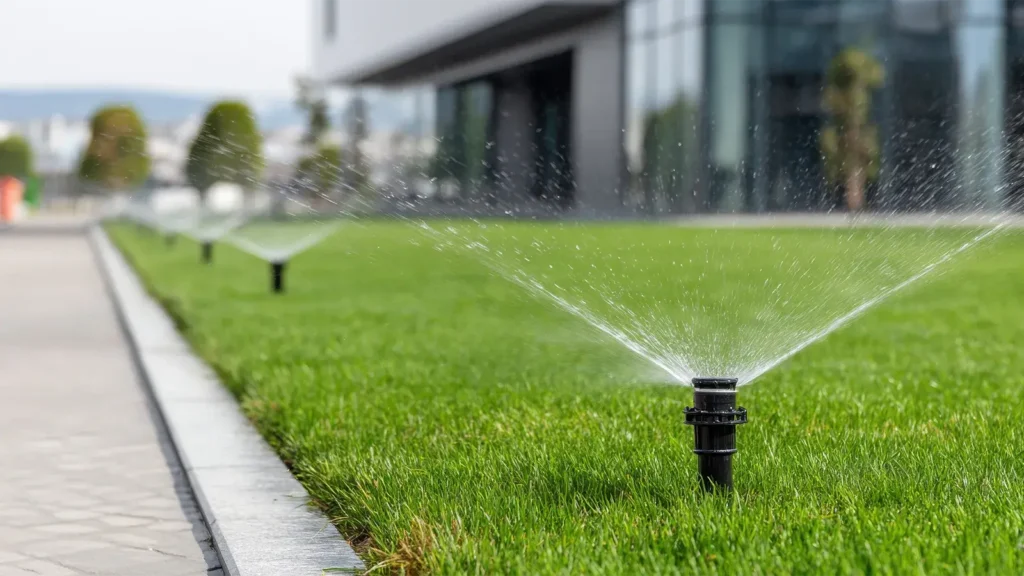
Did you know that misting is one of the biggest sources of water waste? When water pressure is too high, droplets turn into a fine mist that drifts away in the Colorado wind before it ever touches the ground. We utilize pressure-regulating heads and multi-stream rotary nozzles that deliver larger, wind-resistant droplets. This ensures that water is applied at a rate the soil can actually absorb, preventing wasteful runoff.
3. Drip Irrigation for Precision
For flower beds, shrubs, and even some specialized turf areas, drip irrigation is the king of sustainable irrigation practices. By delivering water directly to the root zone through a network of emitters, we eliminate evaporation loss and keep weed growth to a minimum (since the surface soil remains dry).
Designing Sustainable Irrigation for Colorado’s Unique Challenges
Colorado presents a set of challenges you won’t find in the Midwest or on the Coasts. Our high elevation means higher UV intensity and faster evaporation rates. Our soil is often a mix of stubborn clay or porous sand, neither of which handles standard watering well.
The Power of Zoning and Micro-Climates
A professional irrigation design accounts for hydro-zones. This means grouping plants with similar water needs on the same valve. Your thirsty vegetable garden shouldn’t be in the same zone as your drought-tolerant native shrubs. By segmenting the landscape into micro-climates—taking into account shade from the house, slopes that cause runoff, and sun-baked south-facing walls—we can tailor the delivery to match the environment perfectly.
Implementing Cycle and Soak
In regions with heavy clay soil, applying a large volume of water at once leads to instant runoff. Our sustainable designs utilize the Cycle and Soak method. This technique breaks a long watering period into several shorter cycles with rest periods in between. This allows the water to seep deep into the root zone, encouraging deeper root growth and making your plants more resilient during a drought.
The Economic and Aesthetic Payoff of Sustainable Irrigation
Many property owners worry that sustainable means brown or barren. This couldn’t be further from the truth. A sustainably irrigated landscape is often more vibrant because it isn’t stressed by the see-saw of being overwatered and then bone-dry.
Furthermore, the ROI on these systems is rapid. Between municipal rebates offered by many Colorado water providers and the immediate reduction in consumption, most high-efficiency upgrades pay for themselves within a few seasons.
According to the Environmental Protection Agency’s WaterSense program, replacing a standard clock timer with a labeled smart controller can save an average home up to 15,000 gallons of water annually. In a state where every drop is contested, that is a massive contribution to our collective future.
Maintenance: The Secret to Long-Term Sustainability
Implementation is only half the battle. To keep a system running at peak efficiency, regular audits are essential. Heads get knocked out of alignment by lawnmowers, and filters can clog with sediment. At Colorado Outdoor Environments, we emphasize the importance of Spring Start-ups and Mid-Season Tune-ups to ensure your investment continues to perform as designed.
Transforming Your Vision Into a Sustainable Reality
The future of Colorado’s outdoor spaces depends on our ability to adapt. As we move further into 2026, the technology available to us has never been better. We can now create lush, inviting environments that respect our natural limits and comply with new state mandates.
Implementing sustainable irrigation is a commitment to the beauty of your property and the health of our state. Whether you are looking to overhaul a commercial complex or enhance your backyard sanctuary, expert design is the bridge between a wasteful past and a green future.
Ready to Modernize Your Landscape?
Don’t wait for the next drought cycle or a high-water bill to make the switch. Colorado Outdoor Environments is here to help you navigate the complexities of modern irrigation and eco-friendly design. Our team of experts specializes in creating high-performance systems tailored to the Front Range’s unique needs.
Contact Colorado Outdoor Environments today, and let’s build a greener, more sustainable Colorado together!